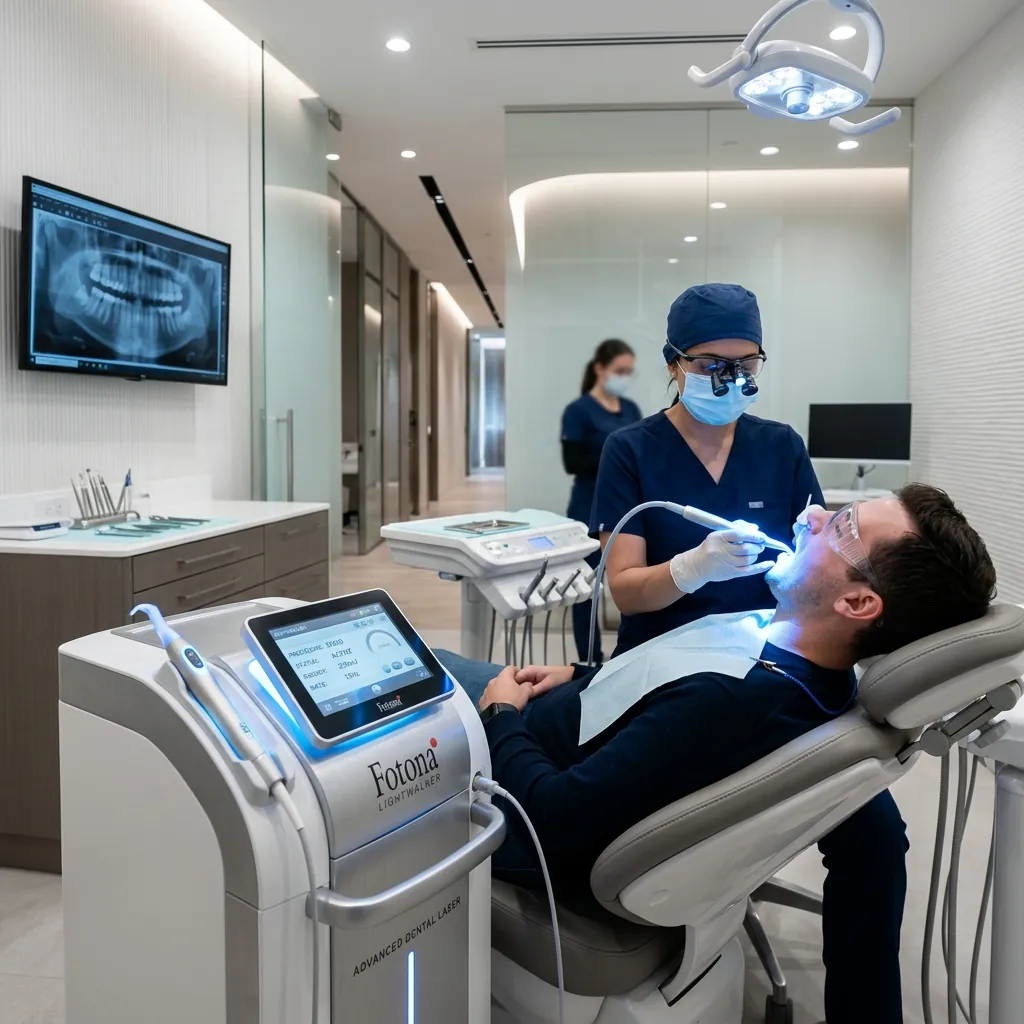
Dental lasers use a focused beam of light to cut, shape or remove tissue with great precision. They're not a replacement for every dental tool, but for certain procedures they make treatment noticeably gentler — and that is where they earn their place.
Where lasers are most useful
- Gum treatment — removing infected tissue from gum pockets and reshaping gums, often with less bleeding than a scalpel.
- Gum contouring — evening out a "gummy" smile or uneven gum line.
- Soft-tissue procedures — such as freeing a tight tongue-tie or removing small growths, frequently without stitches.
- Mouth ulcers and cold sores — laser treatment can reduce pain and help them heal.
- Some cavity preparation and root canal disinfection, alongside conventional instruments.
What patients notice
- Less bleeding, because the laser seals small blood vessels as it works.
- Often no stitches for soft-tissue work.
- For some procedures, little or no injection is needed.
- A lower risk of infection, because the beam sterilises the area it treats.
- Quicker, more comfortable healing in many cases.
Where a laser isn't the right tool
Lasers can't be used on teeth that already have metal fillings or crowns in the area, aren't suited to every type of filling, and some procedures are simply quicker and more predictable with conventional instruments. A good dentist uses the laser where it genuinely helps — not on everything.
Is it safe?
Yes, in trained hands. You and the team wear protective eyewear, and the settings are chosen for the specific tissue being treated. You can read more about the procedures we use it for on our laser dentistry page, or book a consultation at our clinic in Mannady, Chennai.